Bulldozers are essential pieces of machinery in various industries such as construction, mining, and agriculture. They come in different types and sizes, each designed for specific tasks and environments. Among the most common types of bulldozers are wheel bulldozers and crawler bulldozers. While both are effective in their own right, understanding the differences between the two is crucial for selecting the right equipment for your job.
In this article, we will compare wheel bulldozers and crawler bulldozers, highlighting their key features, advantages, applications, and factors to consider when choosing between the two. Whether you are working on urban construction, mining operations, or land development, choosing the right bulldozer can significantly improve the efficiency and cost-effectiveness of your project.
Understanding the Basics of Wheel Bulldozers
1.1 What is a Wheel Bulldozer?
A wheel bulldozer is a type of bulldozer equipped with wheels instead of tracks. The wheels provide mobility and allow the bulldozer to move quickly across flat, solid surfaces like paved roads or hard soil. Unlike crawler bulldozers, which are designed for stability and traction on rugged terrains, wheel bulldozers are built for speed and efficiency on flat surfaces.
1.2 Key Features of Wheel Bulldozers
Maneuverability: One of the main advantages of wheel bulldozers is their maneuverability. The wheels allow for faster turns and easier movement in tight spaces.
Speed: Wheel bulldozers are generally faster than crawler bulldozers, making them ideal for projects that require quick movement from one area to another.
Fuel Efficiency: On smooth, stable surfaces, wheel bulldozers are more fuel-efficient compared to crawler models, as they don’t require the additional power needed to move heavy tracks.
Low Maintenance: Wheel bulldozers require less maintenance than their crawler counterparts, especially when working on flat, stable surfaces.
1.3 Common Applications of Wheel Bulldozers
Wheel bulldozers are best suited for projects where speed and mobility are crucial. Common applications include:
Urban Construction: Wheel bulldozers are used for site preparation, grading, and leveling in urban environments where roads are paved and the terrain is mostly flat.
Road Maintenance: They are ideal for road maintenance and repairs, as they can quickly move along highways or paved roads.
Light-Duty Tasks: Wheel bulldozers are also used for smaller tasks like landscaping, parking lot grading, and light earthmoving.
Understanding the Basics of Crawler Bulldozers
2.1 What is a Crawler Bulldozer?
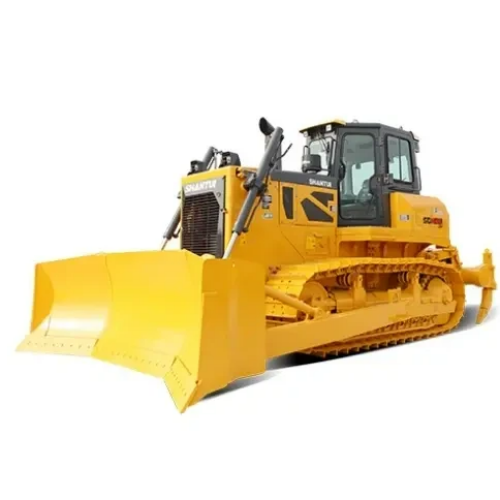
A crawler bulldozer, in contrast to its wheeled counterpart, is equipped with continuous tracks instead of wheels. These tracks provide enhanced stability, traction, and weight distribution, which makes crawler bulldozers perfect for challenging and uneven terrains. Whether it’s rocky, muddy, or hilly terrain, crawler bulldozers are built to handle the toughest environments.
2.2 Key Features of Crawler Bulldozers
Stability: The continuous tracks allow crawler bulldozers to distribute their weight evenly across the surface, which helps them stay stable in soft, uneven, or muddy ground.
Traction: Crawler bulldozers excel in providing superior traction, which is essential for pushing large amounts of material or working on rough terrains.
Heavy Duty Performance: Crawler bulldozers are typically more powerful than wheel bulldozers and are built to carry heavier loads.
Durability: These machines are designed to endure the harshest conditions, offering a longer operational life even in the most difficult environments.
2.3 Common Applications of Crawler Bulldozers
Crawler bulldozers are ideal for projects requiring heavy-duty tasks and stability in difficult conditions. Common applications include:
Construction Sites: Used for large-scale earthmoving, excavation, and land development projects where terrain is uneven.
Mining Operations: Crawler bulldozers are often used in mining operations for overburden removal and other heavy earth-moving tasks.
Land Development: They are essential for developing land in remote, rugged areas where wheel bulldozers would not perform effectively.
Key Differences Between Wheel and Crawler Bulldozers
3.1 Mobility and Speed
Wheel Bulldozers: Wheel bulldozers are designed for quick and efficient movement on flat, solid surfaces. They are faster, which makes them ideal for urban construction or projects where speed is critical. Their higher mobility allows them to easily maneuver in tight spaces, such as parking lots or residential areas.
Crawler Bulldozers: While crawler bulldozers are slower due to their continuous tracks, they provide better traction and stability on rough or uneven terrain. They are more suitable for heavy-duty tasks, such as mining or working in mountainous or muddy areas.
Aspect | Wheel Bulldozer | Crawler Bulldozer |
Speed | Faster movement on smooth surfaces | Slower, more stable on rough terrain |
Maneuverability | High maneuverability in tight spaces | Less maneuverable but more stable |
3.2 Traction and Stability
Wheel Bulldozers: Wheel bulldozers perform best on hard, flat surfaces. They struggle to maintain traction on soft or uneven ground, as the wheels are less effective in these conditions compared to tracks.
Crawler Bulldozers: Crawler bulldozers excel in challenging terrains where traction is crucial. Their tracks distribute weight more evenly, preventing the machine from sinking into soft or muddy ground and providing greater stability overall.
Aspect | Wheel Bulldozer | Crawler Bulldozer |
Traction | Performs best on hard, smooth surfaces | Superior traction on soft, muddy ground |
Stability | Less stable on uneven surfaces | Highly stable on rugged terrain |
3.3 Cost Efficiency
Wheel Bulldozers: On smooth, flat surfaces, wheel bulldozers tend to be more fuel-efficient and cost-effective. They require less power to operate, which results in lower fuel consumption for lighter tasks.
Crawler Bulldozers: While crawler bulldozers generally consume more fuel due to the additional power required to operate the tracks, their durability and ability to handle heavy-duty tasks make them a better long-term investment for challenging projects.
Aspect | Wheel Bulldozer | Crawler Bulldozer |
Fuel Efficiency | More fuel-efficient on flat terrain | Higher fuel consumption on rough terrain |
Maintenance Cost | Lower maintenance cost | Higher maintenance due to tracks |
3.4 Maintenance Considerations
Wheel Bulldozers: Wheel bulldozers generally have lower maintenance requirements, especially when used on paved roads or stable ground. They don't experience as much wear and tear as crawler bulldozers, making maintenance simpler and more cost-effective.
Crawler Bulldozers: Crawler bulldozers require more maintenance due to the wear and tear on the tracks and undercarriage, particularly when used on uneven or rocky surfaces. However, their ability to work in harsh environments often justifies the higher maintenance costs.
Aspect | Wheel Bulldozer | Crawler Bulldozer |
Maintenance Cost | Lower cost on stable ground | Higher maintenance on rough terrain |
Longevity | Suitable for light-duty tasks | Built for heavy-duty, long-term use |
How to Choose the Right Bulldozer for Your Job
4.1 Assess Your Jobsite
Consider the following factors when choosing between a wheel and a crawler bulldozer:
Surface Type: If your worksite is smooth and stable, a wheel bulldozer may be more efficient. For rugged or uneven surfaces, a crawler bulldozer is the better option.
Terrain: Evaluate the terrain conditions. Crawler bulldozers are better suited for challenging conditions, such as muddy, rocky, or hilly landscapes.
4.2 Consider Operational Speed
Fast Operations: If speed is essential, such as in urban construction or road maintenance, wheel bulldozers are the ideal choice.
Heavy-Duty Operations: If the project involves heavy-duty earthmoving or operates in rough conditions, crawler bulldozers are the better fit.
4.3 Budget and Cost Considerations
Upfront Costs: Wheel bulldozers typically have lower upfront costs, making them a good choice for smaller, less demanding tasks.
Long-Term Investment: Crawler bulldozers might have a higher initial cost and fuel consumption but are more durable and cost-effective for heavy-duty tasks in difficult environments.
Conclusion
In conclusion, selecting the right bulldozer for your project involves considering key factors such as terrain, job requirements, and budget. Wheel bulldozers are ideal for smooth, stable surfaces, offering faster speeds and better fuel efficiency, making them perfect for urban construction, road maintenance, and lighter tasks. On the other hand, crawler bulldozers excel in rough, uneven terrain, providing superior stability and traction. These machines are better suited for heavy-duty operations, including mining and large-scale land development.
At Jining Qianyu Commercial & Trade Co., Ltd, we offer a range of bulldozers tailored to meet the diverse needs of your projects. Whether you require the speed and efficiency of a wheel bulldozer or the power and stability of a crawler bulldozer, we are here to provide expert guidance and help you select the best equipment. Contact us today to learn more about how we can support your construction, mining, or development needs, ensuring maximum efficiency and cost-effectiveness for your project.
FAQ
What is the main advantage of a wheel bulldozer?
Wheel bulldozers are faster and more maneuverable on flat surfaces, making them ideal for urban construction, road maintenance, and tasks requiring quick movement.
Are crawler bulldozers better for rough terrain?
Yes, crawler bulldozers provide superior traction and stability on uneven or soft terrain, making them ideal for mining, land development, and other heavy-duty operations.
Can wheel bulldozers be used on construction sites?
Yes, wheel bulldozers are commonly used on construction sites, particularly in urban environments where the surface is flat and stable.
Which bulldozer is more cost-effective in the long run?
Crawler bulldozers may have higher fuel consumption, but their durability and ability to handle heavy-duty tasks make them a better long-term investment, especially in challenging conditions.
Can a wheel bulldozer perform heavy-duty tasks?
Wheel bulldozers can perform light to medium-duty tasks efficiently, but for heavy-duty operations like mining or large-scale construction, a crawler bulldozer is recommended.


